UNDEFEATED
by Jennifer J. Wallace
Growing up in Willow, Alaska, 75 miles north of Anchorage, Odie Delaney, ’13, had the quintessential home life with loving parents, two sisters, a brother, cousins, potluck suppers, and a vast stomping ground to hunt and fish and play. Descendants of Swedish and German homesteaders, the Delaneys were rooted in the small, rural community and had close ties with their church and extended families. Yet trailing Delaney through his otherwise idyllic childhood on the playground in elementary and middle school, a handful of bullies mercilessly taunted and beat up the tall, lanky, socially awkward boy. That all ended when Delaney’s parents divorced. His mother remarried an Air Force pilot and moved the family to Florida just as Delaney was beginning his freshman year of high school. In the Panhandle, the boy who had once been bullied and who missed his Alaskan way of life threw himself into wrestling, becoming the Florida state champion and placing fifth in the country. Delaney would grow up to discover that just as the school bullies lurked in the playground, greater evils existed in unlikely places that threatened his sanity and his very being.
The first coach Delaney met after he stepped off the mat at the 2008 National High School Wrestling Championships in Virginia Beach, Va., was Jeff Ragan who served as The Citadel assistant wrestling coach from 2000 to 2014. Ragan handed him a pamphlet and began talking about The Citadel. “He told me it was a military school,” said Delaney, “and I was like, there’s just absolutely no way that’s happening, and I actually threw the pamphlet away.”
But Delaney ended up visiting the military college anyway, and in the end, his decision was a coin toss between The Citadel and Appalachian State. In hindsight, Delaney said his scholarship to The Citadel set him up for success. “I think going to The Citadel and having mandatory study time and access to tutors taught me how to study. I hadn’t figured that out in high school,” he said, “and then I went on to get my master’s degree, and it was all because of The Citadel. I don’t think I would’ve made it anywhere else.”
Delaney was a criminal justice major who started out in Mike Company and moved to Papa. An ultra-conservative Christian, Delaney found an unusual influence in his roommate Phillip Ford. “He was a very liberal atheist who worked on Hillary Clinton’s campaign as a volunteer,” said Delaney, “and we had the best conversations. I probably learned more from him than I’ve ever learned from anybody. I came down from Alaska as a hardcore Christian conservative, and he kind of helped pull me back to center, and I think I kind of pulled him back to center.”
In their frequent two- and three-hour discussions, the cadets who came from opposite ends of the spectrum learned respect for one another and their viewpoints, and they walked away better for knowing each other.
“I think that God puts people in your life for a reason,” said Delaney. “It’s funny, you’d think that another Christian conservative would be the most influential person in my life, but not by a long shot.”
Another influence was combat veteran and ROTC instructor Sgt. 1st Class Keith Polidoro. “He was the most humble guy that I ever met and the most capable. He would never talk about his own accomplishments, but other men would for him,” said Delaney. “He was an extremely humble person and kind, and I really respected that because that’s how I try to live my life. I think that you should be a capable man, but a kind man. And I think that’s like a true sign of power, so I connected with him, and we still talk today.”
On the mat, Delaney became the college’s most celebrated wrestler, for which he was inducted into the Hall of Fame in 2018. “When you’re wrestling, all that matters is becoming an all-American, and the only way to do that is to place in the top eight at the NCAA at the end of the year,” he said. “Almost nothing else matters besides that.”
As a junior, Delaney made it all the way to what’s called the “blood round.” Winning the match would have made him an all-American. Delaney lost. It was the end of an Olympic red shirt year when the best NCAA wrestlers take a year off to pursue the Olympics. In Delaney’s senior year, those Olympic hopefuls would be returning to compete on the collegiate level, which meant that his competition for All-American would be even steeper.
“So I had 365 days either just to give up on wrestling or accept the possibility that I could work those 365 days the way a wrestler does, and then still fail in the end,” said Delaney. A conversation with Ragan, however, convinced him that the challenge was worth the hard work, and after training solidly four to five hours a day for 365 days, he became an All-American, finishing seventh in the 2013 NCAA Championships in Des Moines, Iowa, and leading The Citadel to the No. 20 national ranking.
“It taught me that nothing’s impossible. If you really put your mind to it, you can achieve almost anything.”
In 2013, Delaney graduated and went to work for the Charleston Police Department. On June 17, 2015, Delaney was working in a downtown unit when he responded to a call after a white supremacist named Dylan Roof opened fire on a Bible study group at Emanuel African Methodist Episcopal Church. Delaney and his partner were among the first responders to the scene.
“I had so much faith that being a Christian somehow gave you some sort of special protection. I’ve seen a lot of violence in my life, but something about what happened in there, to a bunch of what I considered my people, all brothers and sisters in Christ. And the way that they died—Tywanza was begging me to save his life, and I couldn’t.”
At 26, Tywanza Sanders was the youngest of the victims in the Emanuel AME massacre. Sanders stepped in front of his great-aunt Susie Jackson, 87, to shield her from the gunman. They both died along with seven others, including S.C. State Senator Clementa Pinckney and Rev. Myra Thompson, a lifelong teacher who held two master’s degrees from The Citadel Graduate College.
Six hours after the initial call came in, Delaney drove home, took a shower and went to bed. He didn’t even tell his wife of 18 months what had occurred. A couple of weeks later, he was riding in the passenger seat of his friend’s car to an archery range when he thought he was having a heart attack. His throat constricted and he struggled to breathe. It was as if a 1,500-pound Kodiak bear were sitting on his chest, and he was slowly dying.
Delaney was having a panic attack, a delayed response to the massacre. Post-traumatic stress disorder symptoms often manifest within one month of the traumatic event. According to the National Center for PTSD, 6% of the population will experience PTSD at some point in their lives. For Delaney it was a debilitating condition with chronic panic attacks that sent him into a downward spiral of alcohol, medication and emotional turmoil. As his life began to unravel, so too did his marriage. At his lowest point, Delaney sat in a Charleston PD substation on King Street with his service weapon pointed to his head, ready to end his life. As he sat there contemplating an end to his misery, his thoughts turned. “The first positive thought entered my mind, and I thought about what my future kids might look like,” said Delaney. “That was followed by what my future wife might look like if I was just brave enough to leave the one I was with. I didn’t shoot myself that day.”
From that day forward, Delaney began the long, slow road to emotional recovery. He left law enforcement and got a divorce. He took a government job in Aiken, where he met Savannah Warner. He reconnected with God, became less angry and stopped drinking. The panic attacks became less frequent and more manageable, and Delaney and Savannah married and started building a life together.
Two and a half years after the Emanuel AME shooting, Delaney was ready to try law enforcement again, this time back in his home state of Alaska, in the city of Wasilla. Twelve weeks into his police academy training, an active shooter class derailed his plans. The big man choked back tears as he watched gruesome footage from Columbine and other massacres. He managed to get through the class, but the next morning he had a severe panic attack that sent him to the emergency room and forced him to begin a frank discussion with his superiors.
“There’s no dishonor in picking another career path because obviously you’re a danger to yourself and others if you’re having panic attacks on the job,” he remembered a superior officer saying.
“So I was like, maybe I need to swallow my pride and come to grips with the fact that just because I can’t be in law enforcement anymore doesn’t mean I’m not a man.”
At a crossroads with no means to support his family, Delaney prayed for direction, and with a lot of encouragement from Savannah, he began to consider the idea of a career as a fighter.
“We packed up the apartment, got back in the car and drove from Alaska to Florida to move in with my mom.”
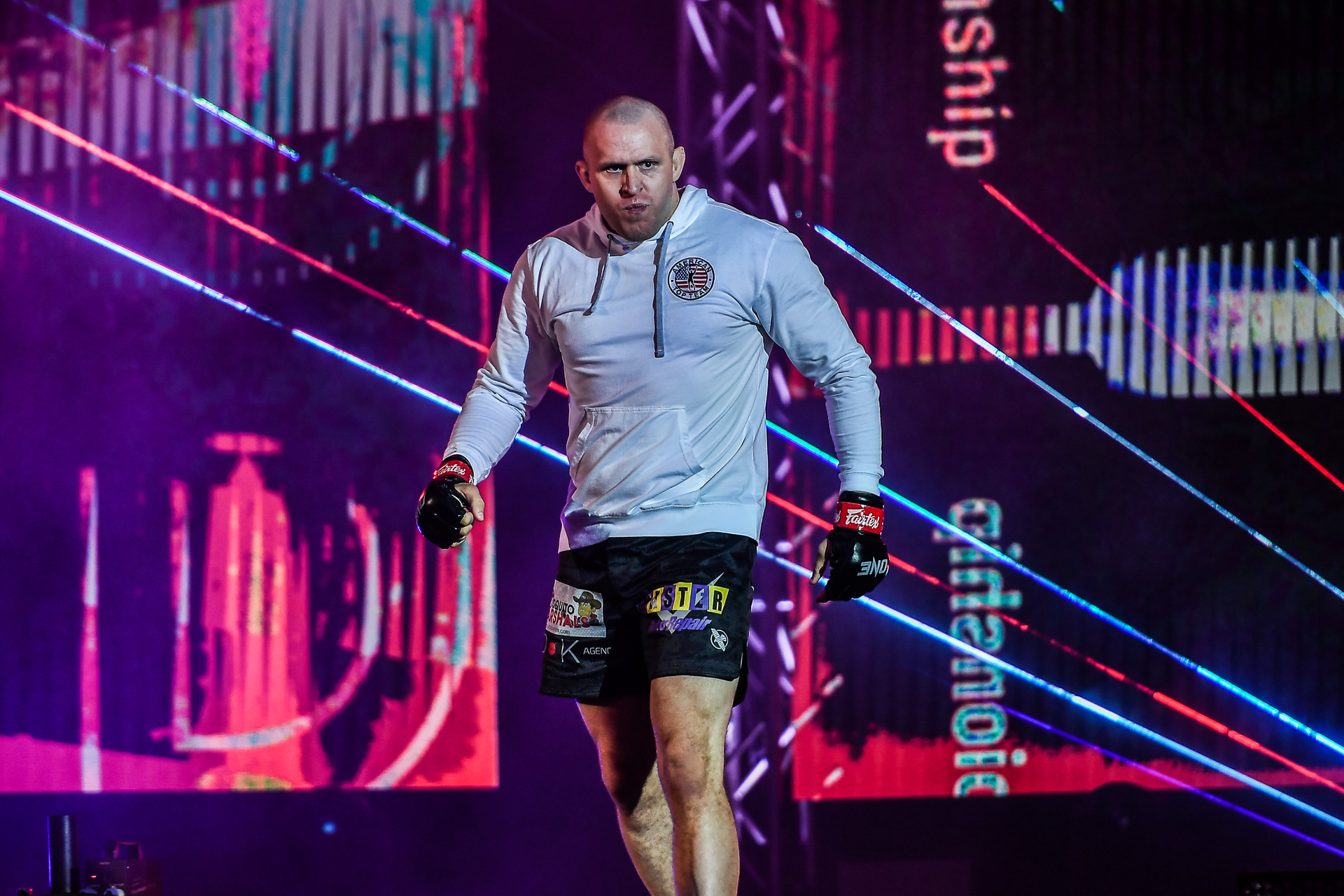
Today, Delaney lives in Biloxi, Mississippi, with Savannah and their two children, Junior and Rae Lynn. He has a contract with One Championship to fight three times a year. One is a Singapore-based promotional company that was ranked among the top five in 2022 by Nielsen for global viewership and engagement. He started out as the Bad Lad, but today he fights under the name The Witness.
“I was gaining a bigger platform, and I knew that I was going to be in front of millions of people,” said Delaney. “One Championship has a huge reach. I realized I needed to have a fight name that’s more on message to what I’m trying to get across, so I changed to The Witness because a witness is someone who attests to the truth, and I feel like I’ve got some of that inside of me, and I want to share it.”
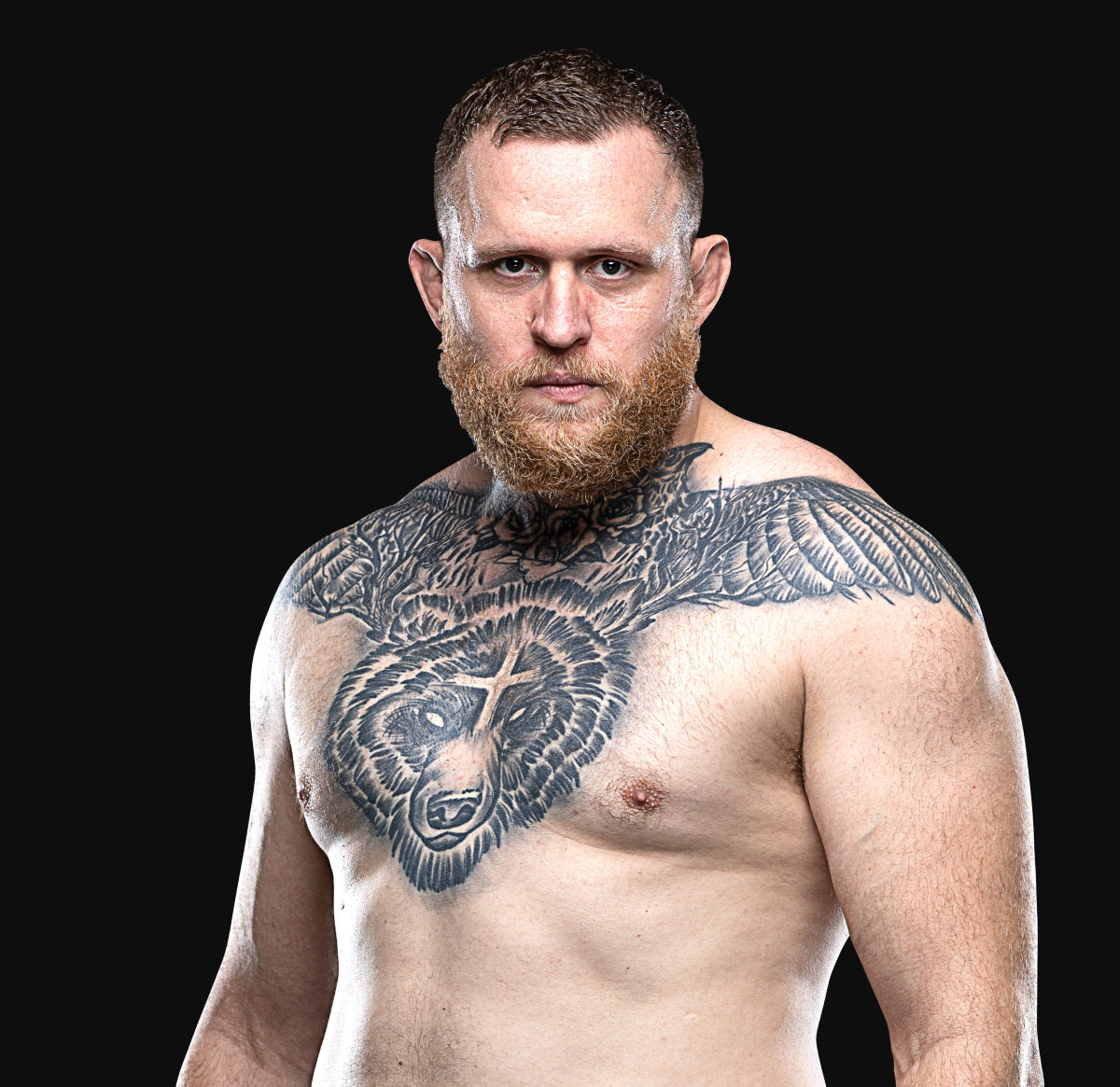
Tattooed across Delaney’s chest is an Alaskan totem, an amalgamation of two ravens, a bear and a cross. “It’s an homage to my fighting spirit from my home. I’ve always felt very connected to the land in Alaska. I go back every year to moose hunt and just be out there in the wild. I’ve always been connected to the wild.”
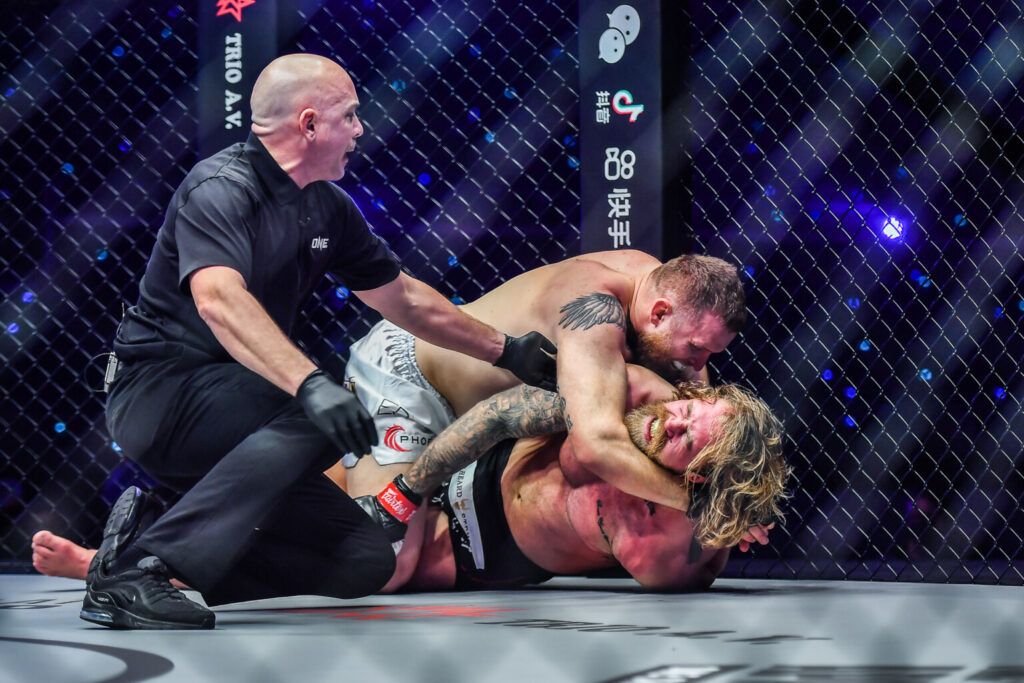
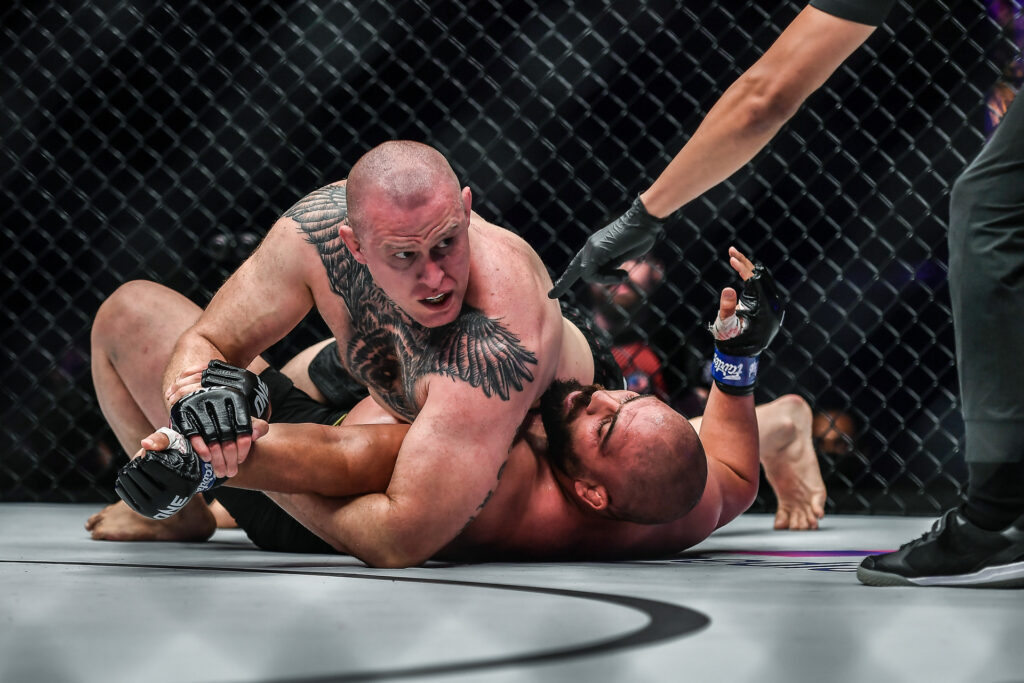
After four years and seven fights on the MMA circuit, Delaney remains undefeated. His life these days revolves around a demanding workout routine and his young family. The panic attacks have subsided in frequency and in intensity. In the early morning hours, while he’s having his coffee and his children are still tucked in bed, he works on a fantasy novel he’s been writing since the pandemic. Love and Honor is a violent, bloody journey with moral overtones, an allusion perhaps to his own life where, against all odds, the good guy conquers evil forces, gets the girl and goes on to live happily ever after. •